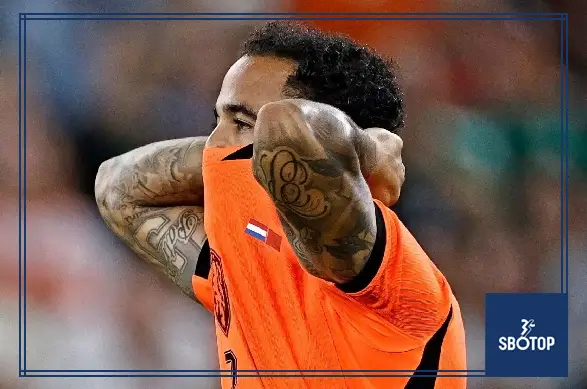
The penalty stutter run-up has long divided football. To some, it is a clever psychological weapon, a legal way for the taker to delay, read the goalkeeper, and create a clearer finish. To others, it is an overcomplicated trick that looks brilliant only when it works and ridiculous when it fails. At the 2026 World Cup, the argument has become louder than ever.
Germany and the Netherlands both suffered brutal shootout exits in the round of 32, and both defeats placed renewed scrutiny on stuttered penalties. Germany lost 4-3 on penalties to Paraguay after a 1-1 draw, while the Netherlands lost 3-2 on penalties to Morocco after their own 1-1 draw. Those two results were major shocks, but they also became case studies in how penalty technique is being re-examined under modern pressure.
Sky Sports reported that stuttered run-ups had produced a conversion rate below 50 percent at this World Cup, with six misses from 11 attempts before including Harry Kane’s retaken effort against Croatia. The same analysis said the technique had previously given Premier League takers a boost of up to 10 percent across five years of data studied by penalty psychology expert Geir Jordet.
That contrast explains the debate. The stutter is not dead because it never worked. It is under threat because it worked so well that goalkeepers, analysts, and coaches have spent years building answers.
What the Stutter Is Supposed to Do
The purpose of the stutter run-up is simple: give the taker more information. Instead of striking the ball in one smooth rhythm, the taker slows down, pauses, hops, or interrupts the run-up just enough to make the goalkeeper reveal movement. Once the goalkeeper leans or commits, the penalty taker chooses the opposite corner.
When executed perfectly, it can look almost unfair. The goalkeeper falls early, the taker rolls the ball into the other side, and the penalty seems less like a shot than a controlled negotiation. For years, this was the appeal. The technique turned the goalkeeper’s anticipation against them.
But every advantage in football creates a counter-strategy. Goalkeepers are no longer simply guessing. They are studying timing, body language, plant-foot angles, eye movement, and the difference between a conventional run-up and a delayed one. Reuters reported that penalty shootouts at this World Cup are increasingly being treated as specialist disciplines, with teams, coaches, and goalkeepers relying more on preparation than the old idea that penalties are a lottery.
That is why the stutter now looks less secure. It depends on the goalkeeper reacting first. If the goalkeeper refuses to react, the pressure shifts back to the taker. The pause becomes hesitation. The trick becomes a burden. The moment that was designed to create control suddenly creates doubt.
The Law Still Allows It But With Limits
The stutter run-up is not illegal by itself. IFAB’s Law 14 allows feinting during the run-up, but forbids feinting to kick the ball once the kicker has completed the run-up. If a player completes the run-up and then deliberately stops or feints at the point of kicking, the player can be cautioned and the restart goes against the attacking team.
That distinction is important. A player can stop, slow, or vary rhythm on the way to the ball. What they cannot do is finish the run-up, pretend to kick, and then delay the strike to deceive the goalkeeper. IFAB’s penalty shootout guidance also states that a kick is recorded as missed and the kicker is shown a yellow card if they feint at the end of the run-up, while stopping during the run-up and then continuing is treated as legal if the kick itself is taken properly.
So the debate is not primarily legal. It is practical. The question is whether a once-powerful legal weapon is losing its edge because the football world has adapted.
In that sense, the stutter is like any tactical trend. The first wave gains an advantage. The second wave copies it. The third wave studies how to stop it. At this World Cup, the goalkeepers appear to have reached the third wave.
Germany’s Pain Shows the Mental Cost
Germany’s defeat to Paraguay was shocking partly because of Germany’s historic reputation from the penalty spot. For decades, German teams were associated with composure, repetition, and ruthless execution. Against Paraguay, that mythology collapsed.
Reuters reported that Kai Havertz, Nick Woltemade, and Jonathan Tah all failed from the spot before Jose Canale converted the decisive penalty for Paraguay. It was Germany’s first World Cup penalty shootout defeat, and Joshua Kimmich later said Germany should not blame the referee or the shootout because they should have had enough quality to beat Paraguay over 120 minutes.
That match was not only about technique. It was about pressure swallowing a team that used to thrive on it. Germany had controlled possession, created territorial dominance, and still failed to settle the contest. By the time penalties arrived, the emotional balance had shifted.
This is where the stutter can become dangerous. It asks a player under enormous stress to perform a delicate mental calculation at the exact moment when clarity is most needed. The taker must move slowly enough to read the goalkeeper, but not so slowly that they lose conviction. They must improvise, but still strike with certainty. They must wait, but not freeze.
When confidence is high, that works. When doubt enters, it can collapse.
The Netherlands Became the Clearest Case Study
If Germany showed the broader psychological cost, the Netherlands offered the clearest technical case study. Morocco’s Yassine Bounou, known as Bono, became central to the discussion because of the way he handled Dutch penalty takers.
Sky Sports described Morocco’s shootout win over the Netherlands as a perfect case study for the stutter debate, highlighting Bounou’s ability to resist being forced into early movement. The analysis noted that he had seen eight of the previous 12 penalties he faced missed and that his bluffing helped plant doubt in Justin Kluivert’s mind before the Dutch winger missed the goal entirely after a stuttered attempt.
That is the modern goalkeeper’s answer: do not be the first to lose patience. A stuttered taker wants the goalkeeper to blink. Bounou made the takers blink instead. He feinted, delayed, and manipulated the duel back toward himself. Against Crysencio Summerville, Sky Sports also noted that Bounou’s actions helped unsettle the Dutch winger before the penalty was saved.
Morocco eventually won 3-2 on penalties, with Ismael Saibari scoring the decisive kick. The Guardian described the shootout as wild, with five misses and a decisive Bounou save before Morocco sealed victory.
The Netherlands did not lose only because of the stutter. They lost because Morocco handled the entire psychological contest better. But the stutter became the visible symbol of Dutch uncertainty.
Goalkeepers Have Joined the Arms Race
The most important shift is that goalkeepers are no longer passive participants. In the old penalty model, the taker held most of the power. The goalkeeper guessed, dived, and hoped. Now the goalkeeper studies. They delay. They use false movement. They turn the taker’s own waiting game against them.
Reuters quoted Geir Jordet saying goalkeepers have been through a “revolution” and are gaining an edge by using preparation, analytics, and smarter methods against penalty takers. Sky Sports made a similar point through the Bounou example, calling the stutter-versus-goalkeeper dynamic an “arms race” and quoting Jordet’s warning that relying on what worked six months or a year ago may no longer be enough.
That phrase, arms race, is the key. The stutter did not suddenly become useless. It became predictable because too many players used it in similar ways. When enough takers rely on the same rhythm, goalkeepers can build counter-rhythms.
Bounou’s method is especially dangerous because he does not merely wait. He performs back. If the taker wants theatre, he gives them theatre. If the taker wants reaction, he offers false reactions. The penalty becomes a psychological mirror, and not every taker can handle seeing their own trick reflected back at them.
The Problem Is Predictability Not the Stutter Itself
The stutter is not finished. Predictable stutters are finished.
A well-executed delayed run-up can still be devastating if the taker has multiple solutions. The problem comes when the taker depends entirely on the goalkeeper moving first. If the goalkeeper stays upright, delays the dive, or disguises their own intention, the taker must still know exactly where the ball is going.
That is where some players are being exposed. They are not using the stutter as one option within a larger penalty skill set. They are using it as the whole plan. Once that plan fails, there is no second answer.
Sky Sports noted that elite takers such as Mikel Oyarzabal remain difficult to read because they can mix corners, stuttered approaches, high strikes, and Panenkas, while Kylian Mbappe uses a hybrid technique that keeps the goalkeeper still without becoming completely dependent on the goalkeeper’s first movement.
That is the future. Not one technique, but variety. Not a fixed routine, but controlled unpredictability. The best penalty takers will not abandon the stutter entirely. They will make it one weapon among several.
Why Fans Turn on the Stutter So Quickly
No penalty technique attracts criticism faster than the stutter when it fails. A conventional penalty blasted over the bar may be called poor execution. A stuttered penalty dragged wide or saved weakly is often called arrogant, theatrical, or foolish.
That reaction is emotional, but understandable. The stutter looks like a player trying to outsmart the moment. When the moment wins, the taker appears to have overthought something simple. Supporters see hesitation where they wanted conviction.
Sky Sports noted that the stutter has often frustrated fans because of its perceived theatrics, especially when it goes wrong. The article argued that the recent high-profile shootout exits of Germany and the Netherlands have intensified that frustration because both losing sides featured stuttered attempts.
There is also a cultural element. Many fans still believe a penalty should be struck with authority. Pick a corner. Hit it hard. Accept the outcome. The stutter challenges that traditional idea by turning the penalty into a slow psychological duel. That duel can be brilliant, but it can also look fragile.
At a World Cup, where national emotion is already extreme, fragile techniques invite harsh judgment.
Penalties Are No Longer a Lottery
The wider lesson from this World Cup is that penalties can no longer be treated as random drama at the end of a match. Reuters reported that teams are increasingly building penalty preparation into their tournament planning, with England’s FA running detailed programmes and Spain’s Luis de la Fuente saying penalties require specialists rather than random volunteers.
That matters for the stutter debate because the technique demands specialist preparation. It is not enough for a player to copy a style seen on television or in club football. The player must know how to respond if the goalkeeper refuses to commit. They must know whether they are watching the keeper, trusting a pre-selected corner, or adjusting at the last instant. They must rehearse those decisions under fatigue, crowd noise, and pressure.
Jordet’s research, cited by Reuters, found that many players who miss penalties show visible signs of emotional collapse afterward, such as making themselves smaller, hiding their face, or avoiding teammates. That human cost is part of the responsibility carried by coaches and federations. If a player is sent into a shootout with an underprepared technique, the failure can follow them for years.
The stutter is not just a movement. It is a mental system. If that system is incomplete, the player is exposed.
Also Read: