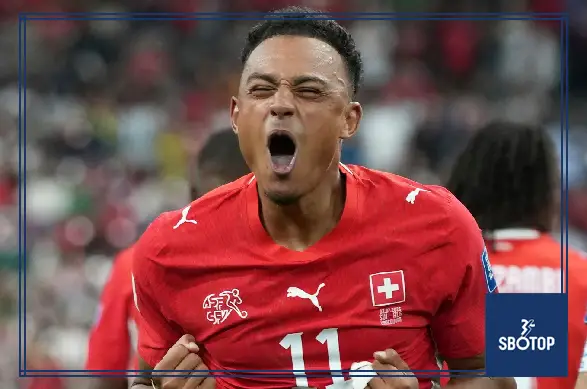
For Switzerland, this was more than a 2-0 win. It was the end of an 88-year World Cup burden, a night when generations of frustration were finally pushed aside by one disciplined, clinical and mature performance in Vancouver. Breel Embolo struck early, Dan Ndoye doubled the lead just after half-time, and Murat Yakin’s side marched into the last 16 with a victory that felt both historic and deeply controlled.
The Swiss had been here before. They had reached knockout rounds, built strong squads, competed well, and earned respect, but too often the story ended at the same painful point. They were eliminated in World Cup knockout games in 2006, 2014, 2018 and 2022, and had not won a knockout tie at the tournament since 1938. Against Algeria, they finally changed that narrative.
The final score looked simple, but the meaning was huge. Switzerland were not spectacular in the traditional sense. They did not overwhelm Algeria with endless attacking waves or dominate possession for the sake of it. Instead, they executed a plan with remarkable discipline: absorb pressure, deny central space, spring forward with pace, and finish when the chances came. Reuters described it as a tactical masterclass from Yakin, with Switzerland setting traps, shifting formations and striking through Embolo and Ndoye at decisive moments.
Embolo Gives Switzerland the Perfect Start
Algeria began brightly. They pressed with energy, carried the ball forward with purpose, and tried to force Switzerland into mistakes. For the opening minutes, it looked as if the Desert Foxes might be able to unsettle the Swiss structure. But knockout football is rarely about who starts louder. It is about who turns the first real opening into a goal.
That team was Switzerland.
In the 10th minute, Johan Manzambi broke down the flank with pace and intent before sending a low cross into the box. Embolo arrived with perfect timing and swept the ball home from close range. It was a goal of simplicity, speed and precision, exactly the kind of transition Switzerland had been waiting to unleash.
Embolo’s goal immediately changed the emotional landscape. Algeria had started with confidence, but suddenly they were chasing the game. Switzerland, meanwhile, had the one thing every knockout team craves: control of the scoreboard.
The finish also underlined Embolo’s importance. He is not only a striker who can occupy defenders; he is a forward who understands tournament moments. His movement was sharp, his finish composed, and his celebration carried the release of a team that knew how much the opening goal mattered. He later said Switzerland had to be clinical and that their finishing made the difference, while also stressing that the team needed to stay humble.
Manzambi Becomes Switzerland’s Spark
Although Embolo and Ndoye took the goals, Johan Manzambi was one of the night’s biggest stories. The 20-year-old continued his breakout World Cup with another confident display, adding creativity, speed and fearlessness to Switzerland’s attack. His assist for Embolo’s opener was not accidental. It was the product of direct running, strong decision-making and the kind of boldness that can change a knockout match.
Reuters reported that Manzambi entered the Algeria game already carrying three goals and an assist in the tournament, then set up the opener in the 2-0 win. The same report noted that Yakin praised his versatility, assertiveness and ability to help both offensively and defensively.
That matters because Switzerland have often been viewed as organised, reliable and hard to beat, but not always explosive. Manzambi gives them a different dimension. He can stretch a back line, carry the ball through pressure, and inject unpredictability into a team built on structure.
Sky Sports noted that, at 20 years and 261 days old, Manzambi became the youngest player to reach five goal involvements at a World Cup since records began in 1966. That statistic shows how quickly he has become central to Switzerland’s tournament identity.
Against Algeria, every time he accelerated, the game opened. Every time he received the ball with space ahead of him, Algerian defenders looked uncomfortable. His emergence has turned Switzerland from a solid tournament team into one with genuine attacking surprise.
Ndoye Ends Algeria’s Hope Early in the Second Half
If Embolo’s opener gave Switzerland control, Dan Ndoye’s goal almost immediately after the break gave them command. Algeria needed a strong start to the second half. Instead, they were punished within seconds.
Switzerland attacked down the right, Algeria failed to clear properly, and the loose ball fell to Ndoye. The winger took advantage with a clean finish from the edge of the area, beating goalkeeper Luca Zidane and pushing Switzerland into a 2-0 lead. Reuters reported that the goal came after a weak clearance from Rafik Belghali, while Sky Sports recorded it as a 46th-minute strike that effectively sealed Switzerland’s historic victory.
That second goal was devastating for Algeria. At 1-0, they could still believe. They could still push, gamble and force Switzerland to defend deeper. At 2-0, the match became a different puzzle. Algeria had to take risks, but Switzerland’s defensive shape was precisely designed to punish spaces left behind.
Ndoye’s finish also showed Switzerland’s ruthlessness. They did not need many chances. They did not waste the big moments. In a knockout tie that was short on chaos but rich in tactical detail, Switzerland were simply sharper in both boxes.
That is often the difference between a team that survives a World Cup knockout match and one that exits with regret.
Yakin’s Tactical Plan Worked to Perfection
Murat Yakin deserves enormous credit for this performance. Switzerland did not stumble into victory. They controlled Algeria through a carefully prepared plan. They were willing to concede possession in certain areas, close central lanes, force Algeria wide, then break quickly when the opportunity appeared.
Yakin said after the match that Switzerland defended solidly in every phase and did not allow Algeria meaningful chances. He also admitted their pressing did not fully work at the beginning, but said the team exploited spaces well and scored at the right moments.
Those comments describe the match perfectly. Switzerland were not always on the front foot, but they were rarely truly exposed. Algeria had possession spells, yet very little of it felt dangerous. The Swiss midfield worked in layers, the back line stayed compact, and Granit Xhaka helped guide the defensive shape with intelligence and authority.
The key was Switzerland’s ability to change rhythm. Out of possession, they could become compact and narrow. In transition, they could explode forward through Manzambi, Ndoye and Embolo. That tactical contrast left Algeria uncomfortable. They were invited to attack, but not given the spaces they wanted.
This was not just a win of goals. It was a win of planning, patience and execution.
Algeria Struggle to Turn Energy Into Chances
Algeria’s biggest frustration will be that they started with enough energy to believe they could make the night difficult. They were aggressive in the opening minutes and showed flashes of the attacking quality that had carried them into the knockout stage. But once Switzerland scored, Algeria’s rhythm became strained.
Their best chance came in first-half stoppage time, when Ibrahim Maza dragged a quick shot wide. Mahrez later had an opportunity from a central position shortly after Switzerland’s second goal, but his effort was blocked. Reuters described that moment as a summary of Algeria’s frustrating evening.
The problem was not desire. Algeria had plenty of it. The problem was clarity. Switzerland denied them the central spaces they needed, and when Algeria moved wide, their deliveries and final actions rarely caused real panic. Mahrez, their captain and most experienced creative force, was carefully tracked and restricted.
Sky Sports reported that Switzerland “shackled” Mahrez after Algeria’s bright start, while also noting that his only real chance was blocked by Manuel Akanji. That detail is important. Switzerland did not merely defend generally; they controlled Algeria’s most influential player.
For a team chasing the game, that was fatal.
Mahrez’s Emotional Farewell
The defeat also marked the end of an era for Algerian football. Riyad Mahrez announced his retirement from international football after the loss, closing a national-team career that included 119 appearances, 40 goals and Algeria’s memorable 2019 Africa Cup of Nations triumph.
That made the night heavier. Mahrez has been one of Algeria’s great modern icons: elegant, creative, technically gifted and capable of changing matches with a single touch. He was central to Algeria’s continental glory and gave the national team a global identity during one of its most important modern periods.
But football does not always offer perfect endings. Mahrez did not leave with a goal, a comeback or a heroic final act. Instead, his last match came on a night when Algeria could not break through Switzerland’s defensive wall.
That should not diminish his legacy. One defeat cannot erase the years of leadership, the goals, the assists, the moments of genius, or the inspiration he gave to Algerian football. But it does add a layer of sadness to the result. Switzerland celebrated history; Algeria said goodbye to an icon.
Also Read: