Portugal are still alive at the 2026 World Cup, but they reached the last 16 in the most dramatic and controversial way possible. Their 2-1 victory over Croatia in Toronto had almost everything a knockout match can deliver: an early warning, a second-half Croatian breakthrough, Cristiano Ronaldo’s long-awaited World Cup knockout goal, a late winner from Gonçalo Ramos, several disallowed goals, and one final VAR decision that left Croatia devastated.
On paper, Portugal’s passage to the next round will be recorded as a comeback win. Ivan Perišić put Croatia ahead, Ronaldo equalised from the penalty spot, and Ramos headed in the winner deep into stoppage time. But the match will be remembered less for its clean storyline and more for its emotional disorder. Croatia thought they had forced extra time when Joško Gvardiol scored in the 113th minute of the wider match timeline, only for the goal to be ruled out after technology detected a faint touch from Igor Matanović that made Mario Pašalić offside in the build-up.
That decision kept Portugal’s tournament alive. It also ended what is almost certainly Luka Modrić’s final World Cup match, closing one of the most admired international careers of the modern era in bitter fashion.
Ronaldo’s Dream Refuses to Die
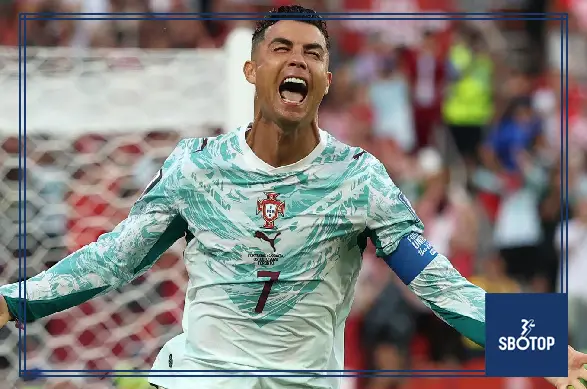
For Cristiano Ronaldo, this was more than another knockout match. At this stage of his career, every World Cup fixture carries the feeling of a final chapter. Defeat could have ended his pursuit of the only major trophy missing from his collection. Instead, Portugal survived, and Ronaldo got the goal that had escaped him across so many World Cup knockout appearances.
His equaliser came from the penalty spot in the 68th minute, after a VAR review judged that Renato Veiga had been pulled down by Nikola Vlašić inside the box. Ronaldo stepped up and finished calmly, bringing Portugal level after Perišić’s opener had threatened to turn the match into a Croatian farewell party. Sky Sports reported that it was Ronaldo’s first goal in the knockout stages of a World Cup, a milestone that arrived with Portugal under huge pressure.
The goal did not suddenly make Portugal fluent. It did not erase the tactical concerns around Roberto Martínez’s side. But it mattered because it kept them breathing. Ronaldo’s tournament dream did not need a vintage performance. It needed one decisive moment, and he delivered it.
That has been the story of Ronaldo’s career in many ways. Even when the rhythm is not perfect and the game seems to move away from him, he can still turn one moment into history.
Croatia Strike First and Shake Portugal
Croatia had entered the match with experience, patience and the emotional weight of Modrić’s possible farewell. Their first half did not produce enough cutting edge, but they started the second half with far more conviction. In the 53rd minute, Perišić fired Croatia in front after a strong spell of pressure, and suddenly Portugal looked vulnerable.
That goal changed everything. Portugal had enjoyed moments of control, but Croatia’s lead exposed the anxiety within Martínez’s side. Sky Sports’ key moments noted that Perišić’s goal came after Croatia’s strong start to the second half, while Portugal then had to survive a spell in which Croatia repeatedly threatened to turn the match decisively in their favour.
Croatia were not simply defending a lead. They were hunting moments. They had a Vlašić goal ruled out shortly after Perišić’s opener, then saw Petar Sučić denied by another offside decision later in the half. The pattern was clear: Croatia had found spaces, Portugal’s defensive line looked uncomfortable, and the match was becoming harder for Martínez to control.
That is why the Portuguese comeback felt so precarious. They were not marching through Croatia. They were clinging to the match, surviving one interruption after another, and waiting for their substitutes to change the momentum.
Martínez Rolls the Dice
Roberto Martínez made a major intervention in the 63rd minute. Bruno Fernandes, Pedro Neto, Vitinha and João Cancelo were all withdrawn, with Nélson Semedo, Bernardo Silva, Francisco Conceição and Gonçalo Ramos introduced. It was a bold reset at a delicate moment, and it reshaped Portugal’s attacking rhythm.
The changes were not universally easy to understand in real time. Removing so much creative quality in one wave can look risky, especially when chasing a knockout match. But the substitutions eventually helped Portugal become more direct and more fluid. Ramos, in particular, gave Portugal a penalty-box presence that would later prove decisive.
Sky Sports’ post-match analysis pointed out that the debate before the Spain match would include whether Ramos should start instead of Ronaldo, but it also noted that the broader issue was not only about Ronaldo. Portugal’s midfield had struggled to dictate the game, and Martínez’s changes helped his side move with greater purpose.
That is one of the most important lessons from this match. Portugal’s problems cannot be reduced to one ageing superstar. The team contains elite midfielders and attackers, but it still struggles at times to connect control with penetration. Against Croatia, the rescue came from a penalty, a substitute striker and a controversial VAR call.
That is enough to survive one night. It may not be enough to survive the tournament.
Ramos Delivers the Late Blow
Gonçalo Ramos became the match-winner in the 94th minute. Rafael Leão delivered a clever cross into the box, and Ramos rose between Croatian defenders to glance a brilliant header inside the post. It was a classic striker’s goal: sharp movement, brave timing, and a finish that did not need power because the direction was perfect.
The Guardian’s live report described the header as superb, noting that Ramos outleapt both Gvardiol and Marin Pongračić to steer Leão’s cross into the net. Sky Sports also recorded Ramos’ winner as coming in the 90+4 minute, shortly after ten minutes of stoppage time had been announced.
For Ramos, the moment was personal as well as national. After the game, he said he loved those pressure moments and wanted to play in matches where everything was on the line. That mentality is exactly why his goal may reshape Portugal’s selection debate for the next round.
Ramos did not just score. He reminded everyone that Portugal have a younger, more mobile centre-forward option who thrives on attacking space and arriving at the right moment. Ronaldo remains the symbol. Ramos may be the tactical solution.
The VAR Decision That Broke Croatia
Just when Portugal appeared to have survived, Croatia produced one last twist. Gvardiol found the net late in stoppage time, and for a few seconds, it looked as if Croatia had pulled off another dramatic rescue act. Then VAR intervened.
The controversy centred on whether Matanović had touched Perišić’s cross before the ball reached Pašalić, who then set up Gvardiol. Using the ball’s chip and “Snicko” style technology, officials judged that Matanović had made a faint touch. That touch reset the offside phase and left Pašalić offside before his assist. After an on-field review, referee Espen Eskas disallowed the goal.
This was football at its most modern and most uncomfortable. The technology may have been accurate, but the emotional effect was brutal. Croatia had celebrated a goal that would have extended Modrić’s World Cup journey. Moments later, the dream was gone because of a touch almost impossible to see with the naked eye.
To Portugal, it was justice through precision. To Croatia, it was the destruction of emotion by technology.
Dalić’s Anger and Martínez’s Defence
Zlatko Dalić did not hide his frustration. The Croatia coach criticised the refereeing after the 2-1 defeat, saying it had been “very bad”, although he also refused to use it as an excuse. He admitted Croatia could have done more earlier and said his side had not created enough in the first half.
Dalić’s most emotional remarks were directed at the wider impact of VAR. Sky Sports reported that he said VAR “kills emotions” and that football had gone too far with it. From his perspective, Croatia had been denied not only a goal, but a moment.
Martínez saw it differently. The Portugal coach argued that there had been no lucky call and no bad decision, saying the ball now has a chip and that the intervention was clear. He also defended the penalty awarded to Portugal, saying the decisions were correct and that it was simply unfortunate one team had to lose.
Both views can exist at once. Technology may have applied the law correctly. But the emotional experience of watching a match decided by such a microscopic contact will remain deeply divisive.
Modrić’s Final World Cup Scene
For Luka Modrić, the ending could hardly have been harsher. At 40, this was likely his final chance to win the World Cup, the one trophy that Croatia’s golden generation came so close to touching but never claimed. The 2018 runners-up and 2022 bronze medallists leave this tournament without a medal, and Modrić leaves with one of the cruellest exits of his career.
Dalić acknowledged after the match that this was probably Modrić’s last World Cup and said he was sorry it ended this way. He also described the closing of a wonderful era for Croatian football, while expressing confidence that a new generation is ready to emerge.
That is what made the final whistle so emotional. Modrić and Ronaldo embraced at full-time, two legends standing at opposite ends of the same story. One survived to fight again. The other walked away from the World Cup stage, carrying both pride and heartbreak.
Modrić’s legacy does not depend on this defeat. He changed Croatia’s football identity, led them through their greatest modern era, and turned a small nation into a consistent tournament force. But endings matter, and this one felt painfully unfair.
Also Read:
- SBOTOP: Embolo and Ndoye End Switzerland’s 88-Year Wait With Historic World Cup Knockout Win Over Algeria
- SBOTOP: Oyarzabal Leads Ruthless Spain Past Austria as European Champions Cruise Into World Cup Last 16
- SBOTOP: Declan Rice Emerges as Tuchel’s Surprise Right-Back Fix After England’s DR Congo Win