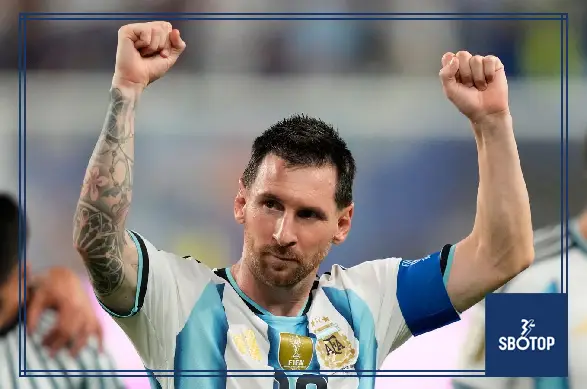
Argentina are still alive at the 2026 World Cup, but their title defence came dangerously close to collapsing in one of the most dramatic matches of the tournament. The reigning champions beat Cape Verde 3-2 after extra time in Miami, but the final score barely captures how close football came to witnessing one of the greatest shocks in World Cup history. Cape Verde, playing in their first global finals, twice came from behind and forced Argentina deep into extra time before a deflected Cristian Romero header off Diney Borges finally settled the match.
For Argentina, this was survival rather than superiority. Lionel Messi scored again, Lisandro Martínez appeared to have won the game early in extra time, and Romero’s late intervention eventually carried Lionel Scaloni’s side into the last 16. Yet the champions left with questions as large as their relief. Cape Verde exposed problems in Argentina’s pressing, defensive spacing, and ability to control momentum under pressure.
For Cape Verde, defeat did not feel like failure. It felt like arrival. The island nation exited the tournament with heads held high after giving the world champions a match that will live in World Cup memory. They did not just defend, delay, or hope. They played, fought, equalised twice, and forced Argentina to suffer until the final minutes.
Messi Opens the Door
The script initially looked familiar. Argentina had the ball, Cape Verde defended bravely, and Messi eventually found a way through. In the 29th minute, Lisandro Martínez lifted a precise pass over the Cape Verde defence, and Messi controlled it beautifully before finishing into the roof of the net. It was his seventh goal of the tournament and his 20th goal across six World Cup editions.
The goal seemed to confirm what many expected: Argentina would find their moment, calm the match, and slowly pull away. Cape Verde goalkeeper Vozinha had already become one of the stories of the tournament after his performance against Spain, but even he could not stop Messi’s first-half finish.
Yet this was not a match that followed the expected rhythm. Cape Verde did not collapse after conceding. They did not become emotional or reckless. Instead, they kept their shape, continued to pass with courage, and grew into the contest. Argentina had the lead, but they did not have peace.
Cape Verde Refuse to Follow the Underdog Script
Cape Verde’s performance was remarkable because it was not based only on defending. They were organised, but they were also brave in possession. They moved the ball cleanly, looked for combinations, and showed the confidence of a side that had already frustrated Spain, Uruguay, and Saudi Arabia in the group stage. Reuters noted that Cape Verde had hoped to frustrate Argentina in the same way, and for long spells they succeeded.
Their equaliser arrived just before the hour mark. Ryan Mendes found space on the right and delivered into the box, where Deroy Duarte controlled with his left foot before finishing with his right. It was a superbly composed goal from a midfielder who had not previously scored for Cape Verde in 36 appearances.
That moment changed the match. Argentina were no longer managing a narrow lead. They were being dragged into a fight. Cape Verde had not simply survived the opening hour; they had earned their way back into the game.
Vozinha Keeps Cape Verde Dreaming
After Duarte’s equaliser, Argentina tried to respond through Messi. He had a chance minutes later, but Vozinha stayed strong and denied him. The Cape Verde goalkeeper also tipped away one of Messi’s free kicks in the 72nd minute, while Pico Lopes later made an important intervention to stop Enzo Fernández from scoring.
Those moments mattered because they gave Cape Verde belief. Every save, every clearance, and every successful defensive action made the impossible feel slightly more possible. Argentina had more famous names, more tournament experience, and more technical quality, but Cape Verde had something just as powerful: absolute commitment.
Vozinha’s tournament had already become a fairytale. Against Argentina, he added another chapter. He did not keep a clean sheet, but he gave his team enough time to believe. For a while, that belief threatened to shake the champions from the tournament.
Argentina Look Short of Ideas
One of the most concerning parts of Argentina’s performance was how heavily they depended on moments rather than flow. Messi scored, but outside his touches, Argentina often struggled to break Cape Verde’s structure. Reuters described Argentina as largely short of ideas apart from Messi against Cape Verde’s stubborn defence, with Kevin Pina impressing for long periods.
This is what will worry Scaloni most. Argentina have enough talent to win matches even when they are not fluent, but World Cup knockout football becomes increasingly unforgiving. Against Cape Verde, their spacing was not always right, their pressing lines became stretched, and their midfield did not consistently dominate second balls.
Messi later admitted that Argentina struggled to press properly because the lines were too far apart, forcing the team to chase the ball and spend energy without controlling the match. That was not just a physical complaint. It was a tactical warning.
Extra Time Brings More Drama
When the match went to extra time, Argentina finally appeared to have regained control. Just two minutes into the first period of extra time, Lisandro Martínez struck a powerful shot into the roof of the net to make it 2-1. It was a huge moment for a defender whose comeback from serious injury made the goal even more emotional.
For many teams, that would have been the breaking point. Cape Verde had already fought for 90 minutes against the world champions. They had already chased the game once. They had already forced extra time. But instead of fading, they produced another extraordinary response.
Sidny Lopes Cabral curled a magnificent shot into the top corner to make it 2-2. The goal raised the possibility of penalties and briefly brought Argentina face to face with disaster. Scaloni later admitted the second Cape Verde equaliser made him desperate for the match to end.
At that moment, the biggest upset in World Cup history no longer felt like fantasy. It felt close.
Romero Forces the Final Twist
Argentina’s winner came six minutes into the second period of extra time. Messi swung in a corner, Romero rose to meet it, and the ball struck Diney Borges before going into the net. Officially, it was an own goal, but Argentina celebrated it as an act of survival.
The goal was cruel for Cape Verde because they had done almost everything right. They had defended with discipline, attacked with courage, and refused to accept the role of brave loser. But knockout football often punishes one small moment. A corner, a header, a deflection, and suddenly the dream was slipping away.
Even after the own goal, Cape Verde were not finished. Lopes Cabral almost equalised again with a free kick, but Emiliano Martínez produced a crucial late save to protect Argentina’s lead.
That save was another reminder that Argentina’s survival required contributions from everywhere. Messi scored and created the decisive corner. Lisandro Martínez scored. Romero forced the winner. Emiliano Martínez preserved it. The champions needed all of them.
Scaloni’s 100th Match Becomes a Test of Nerve
The match carried extra meaning for Scaloni because it was his 100th game in charge of Argentina. What might have been a milestone celebration became one of the most stressful nights of his tenure. He praised Cape Verde after the match and said there are no easy games at a World Cup.
Scaloni also framed the performance around resilience. He admitted Argentina had areas to improve, but stressed that the team had shown character and kept going despite fatigue, cramps, and pressure.
That is both true and incomplete. Argentina did show character. They found a way through a match that could have become a national trauma. But resilience should not hide the tactical problems. Against stronger opponents, Argentina may not get so many chances to correct themselves.
Still, tournament football is not always about perfection. Sometimes it is about surviving the night that nearly breaks you.
Cape Verde Leave as Heroes
Cape Verde’s World Cup campaign ended with a first defeat, but their reputation grew massively. They were the only World Cup debutants to reach the last 32 and were ranked 67th before the tournament. They had already drawn with Spain, Uruguay, and Saudi Arabia before pushing Argentina to the edge.
Coach Bubista said his players showed dignity, courage, and identity. He also said the sadness in the dressing room was mixed with pride because Cape Verde had stayed alive for the full 120 minutes against one of the greatest teams in the world.
That pride is deserved. Cape Verde did not leave as a novelty story. They left as a team that forced the world to pay attention. Their campaign was not about sympathy. It was about performance.
The Guardian described Cape Verde as stealing the show despite defeat, and that feels accurate. Messi scored, Argentina advanced, but Cape Verde became the emotional centre of the match.
Messi’s Goal Was Not Enough to Hide Argentina’s Problems
Messi’s 20th World Cup goal will be remembered, but so will his post-match warning. Argentina’s captain acknowledged fatigue and pointed directly to the team’s inability to press with compact lines.
That detail matters because Argentina are not just defending a title; they are managing the final phase of a legendary generation. Messi can still decide matches, but Argentina cannot expect him to solve every structural issue. If their midfield stretches too far, if their forwards cannot press together, and if their defence is exposed to repeated waves, even Messi’s brilliance may not be enough.
The positive side is obvious: Argentina are still alive. The negative side is just as clear: they were pushed harder by Cape Verde than many expected, and the warning signs cannot be ignored.
Cape Verde Prove the World Cup Has Changed
The expanded World Cup has created space for stories like Cape Verde’s, but this was not only about format. Cape Verde earned respect through quality. They were organised, technically brave, and emotionally fearless. They proved that smaller football nations can do more than participate; they can challenge the elite.
Their pass-and-move game troubled Argentina. Their defensive discipline frustrated Messi and company. Their response to every setback showed maturity beyond their tournament experience.
That is why this match will last in memory. It was not a one-sided survival story. It was a genuine contest. Argentina were not simply careless; Cape Verde were excellent.
World Cups need these moments. They remind fans that reputation does not win matches by itself. Every team must earn survival on the pitch.
Egypt Await in the Last 16
Argentina’s reward is a last-16 clash with Egypt in Atlanta. The match will bring another emotional storyline, with Messi and Argentina facing Mohamed Salah’s Egypt after the Pharaohs advanced on penalties against Australia. Reuters confirmed that Argentina’s win over Cape Verde set up the meeting with Egypt.
That match will demand a better Argentina. Egypt may not have Argentina’s depth, but they have belief, discipline, and Salah’s individual threat. They also carry momentum from a dramatic shootout win.
Scaloni’s side will need sharper pressing, better control, and quicker decision-making. They cannot afford another open emotional battle. Against Cape Verde, they survived through courage and decisive moments. Against Egypt, they will need more authority.
Also Read: