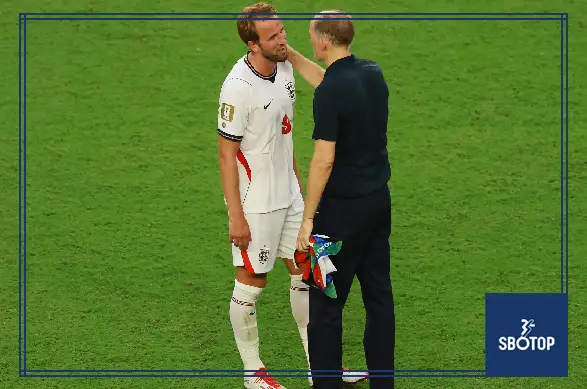
Harry Kane has defended Thomas Tuchel’s demanding approach after the England manager delivered a surprisingly critical assessment of his team’s World Cup quarter-final victory over Norway.
England secured their place in the last four with a dramatic 2-1 extra-time win in Miami, recovering from an early setback through two goals from Jude Bellingham. It was a result worthy of celebration, yet Tuchel emerged from the contest frustrated by the quality of England’s football.
The German coach praised the character, commitment and resilience that carried his players through another difficult knockout match. However, he was dissatisfied with the number of technical errors, the lack of speed in possession and England’s inability to control the contest for sustained periods.
Rather than rejecting those concerns, Kane supported his manager. The England captain admitted that the team had displayed only brief examples of its best football during the tournament. He argued that Tuchel’s criticism came from seeing what the players produced in training and believing they were capable of transferring more of that quality into competitive matches.
England have reached the World Cup semi-finals without producing the complete performance expected from a squad filled with elite-level talent. That can be interpreted as a warning or a source of encouragement.
For Kane, it is both.
Kane Understands Why Tuchel Demands More
Tuchel’s comments immediately created debate because they followed one of England’s most important tournament victories in recent history.
The team had survived intense heat, a physical opponent and the psychological pressure of another knockout match. Norway had already eliminated Brazil and possessed major attacking threats in Erling Haaland, Martin Odegaard, Antonio Nusa and Alexander Sorloth.
England still found a way to advance.
Yet Tuchel did not want the result to hide the weaknesses in the performance. He believed England had been fortunate during decisive moments and said their football had lacked the required quality.
Kane understood the reason for that reaction. He explained that Tuchel regularly watches the team train with energy, confidence and attacking freedom. The manager sees players succeeding in individual duels, combining sharply and expressing their technical ability. His frustration comes when that version of England appears only occasionally during matches.
According to Kane, Tuchel is attempting to “drag it out of us.” The phrase captured the relationship between a demanding coach and a group that knows it has more to offer.
Tuchel is not criticising England because he doubts their ability. He is doing it because he believes the gap between their current performances and their potential remains significant.
England Have Shown Their Best Level Only in Glimpses
Kane’s assessment was honest. He did not pretend England had dominated the tournament or consistently controlled opponents. The captain admitted that their highest level had appeared only in short periods. Even against Norway, England produced encouraging passages rather than a complete display.
There were moments when their attacking players combined quickly, the press functioned effectively and Norway were forced backwards. There were also long spells when England moved the ball too slowly, struggled to escape pressure and allowed the match to become chaotic.
Kane believes England are capable of controlling games more effectively. The problem is turning isolated flashes of quality into a performance that lasts for 90 minutes—or longer, if another knockout tie reaches extra time.
That challenge becomes more urgent before the semi-final against Argentina.
England may survive an uneven performance against some opponents because Kane or Bellingham can create a decisive moment. Argentina are more likely to punish every period of uncertainty.
A team featuring Lionel Messi does not need to dominate for an entire match. It may require only one poor pass, one failed press or one space between England’s midfield and defence.
Tuchel wants his players to remove as many of those opportunities as possible.
Tuchel Separates Mentality from Footballing Quality
One of the most important elements of Tuchel’s post-match explanation was his refusal to question England’s mentality.
When asked whether the difficult performance suggested a psychological problem, the manager strongly rejected the idea. He insisted that England’s ability to survive adversity was proof of outstanding character.
His concern was not effort. It was football.
Tuchel praised the players for refusing to lose, overcoming difficult moments and maintaining belief when Norway threatened to end their campaign. At the same time, he argued that the technical and tactical quality remained below the standard required to win the tournament.
That distinction matters.
England have often been criticised in previous tournaments for lacking courage under pressure. The current team has shown the opposite. It has repeatedly found solutions in difficult circumstances and appears comfortable with the emotional demands of knockout football.
What Tuchel wants now is control to accompany character.
Resilience can rescue a team when a match becomes unpredictable. Better possession, cleaner passing and stronger organisation can prevent the match from becoming unpredictable in the first place.
Kane’s response suggested that the players accept this argument. They are proud of their progress, but they are not claiming their football has been flawless.
Bellingham Offered a Different Perspective
Not every England player reacted as calmly to Tuchel’s criticism.
Bellingham, who scored both goals against Norway, initially appeared irritated when told that the manager had been unhappy with the performance. The midfielder highlighted the difficulty of the conditions and the quality of the opposition.
His reaction was understandable.
England had played in demanding heat and humidity, completed 120 minutes and defeated a dangerous Norwegian side. Bellingham had once again carried an enormous physical and creative responsibility before delivering the decisive contribution.
Tuchel later clarified that he fully respected the effort made by Bellingham and his teammates. His dissatisfaction was aimed at the standard of England’s play rather than the commitment of the players.
Kane’s intervention helped reduce the sense of disagreement.
As captain, he placed the manager’s comments within a wider context. Tuchel’s standards were not intended to diminish the achievement. They were intended to prevent England from becoming satisfied before the tournament was finished.
That was an important message before the semi-final. Internal debate can be healthy, but England cannot allow it to develop into a distraction.
Kane and Bellingham Have Carried the Scoring Burden
England’s progress has relied heavily on two players.
Kane and Bellingham had scored 12 of the team’s first 13 goals at the tournament by the end of the Norway quarter-final. Both entered the semi-final stage with six goals.
Their productivity demonstrates the value of having elite players capable of deciding tight matches. It also reveals one of England’s major weaknesses.
Other attackers have not contributed enough goals.
England possess wide players, attacking midfielders and substitutes with the ability to create danger, but their tournament has repeatedly depended on Kane or Bellingham producing the final action.
Tuchel acknowledged that there is nothing wrong with relying on decisive players. Kane and Bellingham accept responsibility and possess the quality required to deliver under pressure.
However, the manager also wants England’s attacking structure to place more teammates in scoring positions.
That improvement would make England less predictable.
Argentina can design a defensive plan around limiting Kane’s service and tracking Bellingham’s late runs. It becomes far more difficult if Bukayo Saka, Eberechi Eze, Morgan Rogers or another attacker also provides a consistent threat.
England’s Dependence on Kane Is Not New
Kane’s influence has been central throughout the knockout phase.
Against DR Congo in the round of 32, he scored twice in a short period to prevent what could have become a historic upset. His finishing, movement and ability to create something from a difficult situation rescued England when the collective performance lacked rhythm.
That pattern has followed him throughout much of his international career.
Kane is England’s captain, record goalscorer and most dependable finisher. It is natural that the team should look to him during decisive moments.
The danger appears when reliance becomes dependency.
A World Cup winner usually needs several routes to victory. There will be matches when the leading striker is tightly marked, receives poor service or simply does not convert the available chances.
England must be capable of succeeding on those days.
Kane’s support for Tuchel was therefore not only an act of loyalty. It reflected his understanding that the manager is trying to make the entire team more functional.
A better collective performance would ultimately help Kane. Faster possession, stronger control and improved movement around him would create more opportunities while reducing the amount of individual brilliance required.
Reaching the Semi-Final Still Deserves Recognition
Tuchel’s standards should not erase the significance of England’s achievement.
The national team has reached only four World Cup semi-finals. Before the current tournament, the previous appearances came in 1966, 1990 and 2018.
England’s modern era has included regular progress into the final stages of major competitions. They have reached European Championship finals and continued to place themselves among the strongest international teams.
Kane described this period as highly successful but acknowledged that one essential element remains missing: a major trophy.
England have repeatedly approached the final step without completing it. Their consistency deserves respect, but players of Kane’s generation do not want to be remembered only for reaching the closing stages.
They want to cross the line.
That ambition explains why Kane can celebrate reaching a semi-final while agreeing that the performance must improve. The team’s objective is not to be recognised as competitive. It is to become champions.
Tuchel Was Hired to Raise the Standard
Tuchel’s post-match reaction also reflected the reason England appointed him.
The former Chelsea, Bayern Munich and Paris Saint-Germain coach arrived with a reputation for detailed tactical work and success in knockout competitions. He was not brought in simply to preserve England’s previous level.
He was expected to find the small improvements capable of turning semi-final and final appearances into a trophy.
That responsibility requires uncomfortable decisions and honest assessments.
A manager focused only on maintaining harmony might have praised the Norway victory and delayed criticism until a private team meeting. Tuchel chose to speak directly.
The approach carried risk. Publicly challenging a squad immediately after a major victory can frustrate players who believe their effort deserves greater recognition.
It can also prevent complacency.
Former England defender Gary Neville argued that Tuchel’s refusal to accept the performance was precisely why he had been appointed. In his view, the tension between elite personalities could benefit the team rather than damage it.
Kane’s response indicated that the captain understood the challenge and was prepared to support it.
International Football Limits Tuchel’s Preparation Time
Tuchel’s frustration may also come from the differences between club and international management.
At club level, a coach works with players almost every day. Tactical patterns can be repeated through numerous training sessions. Mistakes can be corrected before the next weekend, while the transfer market provides an opportunity to recruit players suited to a specific system.
International football offers far less time.
A national coach receives players after demanding club seasons, works with them during short camps and must prepare for opponents with limited training opportunities.
Tuchel wants England to improve their build-up, play through high pressure, counterpress more effectively and spend longer periods in the final third. Those are complex areas that normally require repetition.
He must therefore balance tactical ambition with practical compromise.
England cannot become a club team during one tournament. They can, however, simplify their principles and improve the speed at which players recognise situations.
Kane’s comments suggest that the quality exists in training. The task is making those behaviours reliable when the pressure rises.
Argentina Will Test Every Weakness
The semi-final against Argentina represents the strongest possible examination of Kane’s belief that England can find another level.
Argentina have the experience of winning the previous World Cup and the confidence generated by another deep tournament run. Messi remains capable of deciding matches through vision, movement or finishing.
England cannot assume that resilience alone will be enough.
Their passing must be more secure. Their midfield must remain connected to the defence. Their attacking players must react quickly after losing possession, especially if Messi begins receiving the ball between the lines.
England will also need to manage the emotional intensity surrounding a fixture with considerable World Cup history.
The ability to remain calm may be as important as tactical discipline.
Kane’s leadership will be central. He must provide an attacking reference point, help England escape pressure and take responsibility if a decisive chance arrives.
Yet Tuchel’s message is that the captain should not have to solve everything alone.
Also Read:
- SBOTOP: Kylian Mbappe Eases Injury Fears as France Star Laughs with Thierry Henry and Michael Olise Before Spain Semi-Final
- SBOTOP: Jude Bellingham Sparks Fresh Injury Fears After Cameras Capture England Star Managing Persistent Shoulder Problem
- SBOTOP: Zlatan Ibrahimovic Mocks Noni Madueke After Disastrous First-Half Display Against Norway