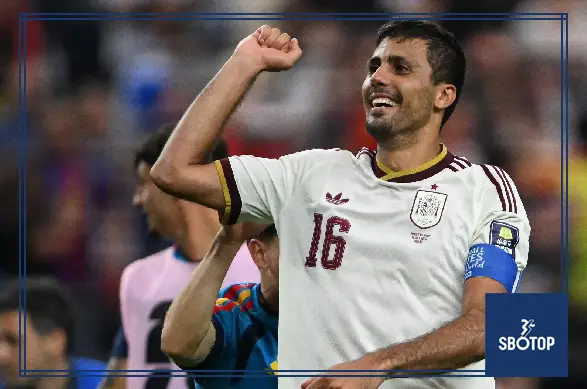
Zlatan Ibrahimovic delivered a typically emphatic verdict after Spain defeated France 2-0 to reach the 2026 World Cup final, declaring that “football won” on a night defined by technical control, tactical intelligence and the commanding presence of Rodri.
The former Sweden striker reserved his greatest praise for Spain’s captain, describing the Manchester City midfielder as magnificent after he controlled the centre of the pitch and helped neutralise one of the most talented attacking teams at the tournament.
Mikel Oyarzabal converted a first-half penalty before Pedro Porro doubled Spain’s advantage after the interval, securing a deserved victory at Dallas Stadium. France possessed enough individual quality to threaten through Kylian Mbappé, Ousmane Dembélé, Bradley Barcola and Michael Olise, yet rarely found the space or rhythm required to unsettle Spain.
At the centre of that Spanish superiority stood Rodri.
He did not score either goal or provide the final pass that will dominate highlight packages. His contribution was less obvious but arguably more important. Rodri dictated the tempo, protected the defence, positioned himself between France’s lines of pressure and ensured that Spain retained control whenever the contest threatened to become chaotic.
Ibrahimovic’s reaction reflected the admiration many former players have for a midfielder whose influence is often best understood by watching the entire match rather than isolated moments.
Ibrahimovic Celebrates Spain’s Style
Ibrahimovic has never been known for cautious opinions. When impressed, he expresses admiration without hesitation. When disappointed, he is equally direct. Following Spain’s victory, the former Barcelona, Paris Saint-Germain, Manchester United and AC Milan forward praised the way Luis de la Fuente’s team approached the semi-final. His declaration that football had won was not meant as a suggestion that France played illegitimately. It was a celebration of Spain’s willingness to control the match through possession, positioning and collective movement.
Spain did not wait for France to make a mistake. They attempted to shape the game from the opening stages.
Their defenders remained comfortable in possession, the full-backs selected their moments to advance and the midfield constantly created passing angles. When France tried to press, Spain moved the ball around the pressure. When Les Bleus dropped deeper, Rodri and his teammates patiently searched for spaces rather than forcing hopeful passes.
Ibrahimovic highlighted Rodri as the player who made the system function. He noted that the midfielder often receives less public recognition than attacking stars, despite having won the Ballon d’Or and operating at an extraordinary level in a position that rarely attracts the same attention.
Rodri’s work was not spectacular in the traditional sense. It was precise, consistent and essential.
Rodri Controls the Match Without Chasing Attention
The best defensive midfielders rarely appear hurried. They seem to know where the next pass will travel before the ball reaches them. Rodri displayed that quality throughout the semi-final.
When Spain built from the back, he moved into spaces that gave the centre-backs a safe passing option. If France attempted to block the central route, he adjusted his position to create room for a teammate. When possession moved wide, he remained available behind the attack, ready to recycle the ball or stop a counterattack.
His influence became especially important because of France’s speed. Mbappé, Barcola and Dembélé are most dangerous when they can attack open grass. Spain therefore needed to remain aggressive without becoming careless.
Rodri provided that balance.
He allowed the attacking players to move forward because they knew he was protecting the space behind them. When Spain lost possession, he either challenged immediately or positioned himself to slow France’s transition.
Ibrahimovic described him as a player capable of both energising those around him and extinguishing danger when opponents threaten. That interpretation captures Rodri’s dual role. He is simultaneously an organiser and a firefighter, improving Spain’s possession while preventing the opposition from exploiting moments of disorder.
Spain’s Opening Goal Rewards Their Authority
France began the match with moments of promise, but Spain gradually established control.
Lamine Yamal repeatedly tested Lucas Digne on Spain’s right. The teenager’s speed and close control forced the French defender to make difficult decisions about when to challenge and when to retreat.
The pressure eventually produced the opening goal.
Digne fouled Yamal inside the penalty area, allowing Oyarzabal to step forward and convert from the spot in the 22nd minute. The striker remained calm under pressure and placed Spain in the position their early superiority deserved.
The penalty became a major turning point because France had not fallen behind at any previous stage of the tournament. Didier Deschamps’ team had built its progress on defensive strength, physical control and the ability to attack from stable positions.
Spain forced France into a different type of contest.
Les Bleus now needed to take greater risks, press more aggressively and find a way through a midfield that had already established its authority. Instead of becoming nervous after scoring, Spain continued to pass with confidence.
Rodri was central to that calmness. He ensured that the team did not become overexcited by the advantage or retreat prematurely to protect it.
Porro’s Goal Demonstrates Spain’s Collective Understanding
Spain’s second goal arrived in the 58th minute and represented the type of coordinated football that inspired Ibrahimovic’s praise.
Pedro Porro advanced from right-back, exchanged passes with Dani Olmo and continued his movement into the penalty area. Olmo recognised the run and returned the ball at exactly the right moment, allowing Porro to finish beyond Mike Maignan.
The move looked simple because every action was performed cleanly. However, its effectiveness depended on several players understanding the same situation.
Porro needed to recognise the available space. Olmo had to trust that the full-back would continue his run. The surrounding players had to occupy defenders and keep passing lanes open.
Rodri’s positioning also mattered. His presence behind the attack gave Porro the freedom to advance without leaving Spain completely exposed if possession was lost.
It was a goal created by the structure rather than a moment of individual improvisation.
That distinction is important when analysing Ibrahimovic’s statement. “Football won” was his way of praising a team whose collective organisation allowed individual quality to flourish.
Spain’s players did not sacrifice creativity for tactical discipline. Their discipline created the conditions in which creativity became more effective.
France’s Stars Are Denied Space
France entered the semi-final with one of the deepest attacking squads in international football.
Mbappé remained the most obvious threat, but Spain also had to account for Dembélé’s movement, Olise’s creativity and Barcola’s direct running. On paper, France possessed enough talent to overwhelm almost any defence.
Spain made those names appear disconnected.
The Spanish midfield prevented France from playing regularly through the centre, while the defensive line remained disciplined enough to limit passes behind it. Rodri constantly monitored the space in front of the centre-backs, reducing the opportunities for France’s forwards to receive between the lines and turn towards goal.
Whenever Mbappé moved inside, Spain surrounded him. When he stayed wide, he received the ball farther away from the penalty area than he would have preferred.
Olise was similarly frustrated. He struggled to find pockets in which he could create, while Dembélé drifted through the match without establishing consistent influence.
France’s problem was not a total absence of possession. It was the lack of useful possession.
Les Bleus often received the ball in areas where Spain were comfortable allowing them to have it. When they attempted to move into more dangerous zones, Rodri and the defenders closed the available routes.
The French press later described the performance as a collective failure and acknowledged that Spain had been technically and tactically superior.
Rodri’s Comeback Makes the Performance More Remarkable
Rodri’s semi-final display carried additional significance because of the journey behind it.
The midfielder suffered a serious anterior cruciate ligament injury while playing for Manchester City in September 2024. The injury required surgery and placed his career at its most uncertain point.
For a player whose game depends on positioning, timing and the ability to cover large areas, returning from such an injury was always going to require patience.
Rodri made his competitive comeback in May 2025 and gradually rebuilt his fitness. By the time of the World Cup, he had recovered sufficiently to start every match for Spain and play almost every available minute.
Ibrahimovic understood the difficulty of that recovery. The Swedish striker also returned from a serious knee injury during his own career, giving him a personal appreciation of the mental and physical demands involved.
Rehabilitation is not completed when a player is cleared to return to the pitch. The player must rediscover confidence, match rhythm and trust in the injured joint.
Rodri did more than return. He recovered his position as the organiser of one of the best national teams in the world.
His performance against France represented the clearest proof that he had again reached the highest level.
A Captain Who Thinks Like a Coach
Rodri’s importance to Spain extends beyond his technical ability.
He is a natural analyst, constantly studying matches, opponents and tactical patterns. Before facing France, he explained that Spain needed to control the contest rather than allow it to become an open exchange of attacks.
He recognised France’s speed, physical power and defensive strength. He also understood that a chaotic game could favour a team containing Mbappé and several dangerous transition players.
Spain followed that assessment almost perfectly.
The match remained organised. France rarely found opportunities to attack a disordered defence, and Spain controlled the tempo through long periods of possession.
Rodri’s leadership was visible in the team’s emotional discipline. He continually communicated with teammates, corrected positions and encouraged younger players to remain patient.
His relationship with Yamal is particularly significant. The winger had just turned 19 before the semi-final and carries enormous expectations because of his extraordinary ability.
Rodri has spoken about the need to keep Yamal calm and help him choose the right moments to express himself. He views leadership not simply as demanding more from teammates but as creating conditions in which they can make better decisions.
Against France, that guidance appeared valuable. Yamal remained dangerous without attempting to solve every attack alone.
Spain Combine Youth and Experience
Spain’s strength lies in the way different generations complement one another.
Yamal provides unpredictability, acceleration and one-on-one quality. Porro contributes energy from full-back, while Olmo moves intelligently between midfield and attack.
Rodri supplies the experience and control that hold those qualities together.
The balance allows Spain to play with freedom without becoming reckless. Young players can take risks because experienced teammates understand how to protect the structure.
This combination has become one of the defining features of De la Fuente’s side. The coach previously worked within Spain’s youth system and knows several members of the squad from earlier stages of their international development.
Rodri and Mikel Merino played together under De la Fuente when Spain won the European Under-19 Championship in 2015. More than a decade later, the same relationships continue influencing the senior national team.
Spain’s journey is therefore not the result of assembling talented players shortly before a tournament. It reflects years of development, shared tactical education and a clear footballing identity.
That continuity helps explain why the team remained composed during the World Cup’s most demanding match.
Also Read: