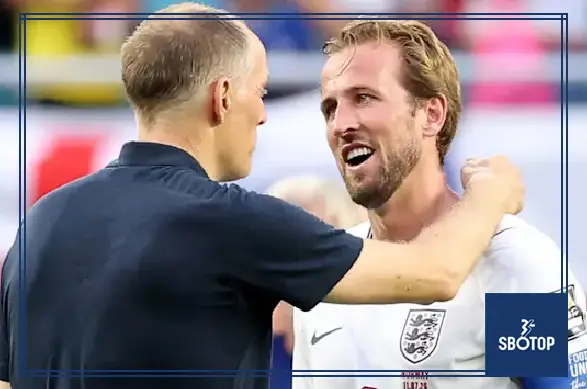
England had just secured a place in the World Cup semi-finals, yet the atmosphere surrounding Thomas Tuchel was far from completely celebratory.
The Three Lions had survived a demanding quarter-final against Norway, recovering from an early setback before eventually claiming a 2-1 victory after extra time. Jude Bellingham scored both England goals, including the decisive strike shortly after the additional period began, but the result did not prevent Tuchel from delivering an uncompromising assessment of his team’s performance.
For the England manager, reaching the last four was an achievement worth celebrating. The manner in which his side reached that stage, however, left him deeply dissatisfied.
Harry Kane later revealed that Tuchel’s dressing-room message combined praise with a clear warning. The players were encouraged to enjoy the moment and recognise the significance of progressing, but they were also reminded that the same level of performance might not be enough in the semi-final.
Tuchel believed England had made the contest unnecessarily difficult through slow possession, technical mistakes and a lack of control. Kane accepted that criticism and presented it as a potentially encouraging sign: England were among the final four despite knowing they could still perform considerably better.
A Victory That Created More Questions Than Answers
Tournament football is ultimately decided by results, and England achieved their primary objective. They overcame Norway, advanced to the semi-finals and moved within one victory of the World Cup final.
Yet this was not the commanding display expected from a squad filled with elite-level players.
England controlled stretches of possession without consistently turning that control into meaningful attacking pressure. Their passing often lacked speed, while their defensive concentration allowed Norway to believe an upset was possible. Instead of imposing themselves on the match, England were drawn into a physical, emotional and increasingly unpredictable contest.
Norway opened the scoring through Andreas Schjelderup in the 36th minute. The goal rewarded a team that had remained disciplined without the ball and dangerous whenever England’s organisation began to loosen.
England’s response arrived before half-time, with Bellingham producing the equaliser. The Real Madrid midfielder then delivered again in the third minute of extra time, converting the opportunity that finally carried his country beyond Norway. His two goals took him to six for the tournament, level with Kane at that stage of the competition.
The comeback demonstrated resilience, but it also exposed problems Tuchel could not ignore.
What Tuchel Told the England Players
Kane explained that Thomas Tuchel began his dressing-room address by congratulating the squad. Reaching a World Cup semi-final is never routine, regardless of the opponent or the quality of the performance.
The manager wanted his players to celebrate the achievement. Knockout football offers no reward for style without progression, and England had shown enough character to survive a difficult night.
However, Tuchel also made it clear that improvement was essential.
According to Kane’s account, the manager believed England remained capable of finding another level. The captain agreed that this should be treated positively. England had reached the semi-finals without producing their best football, meaning the squad still possessed untapped potential before facing an even greater challenge.
Kane identified England’s work in possession as a major area for improvement. Their mentality, togetherness and ability to respond to adversity were already evident, but their use of the ball needed to become smoother and more reliable.
Tuchel’s message was therefore not an attack on the players’ commitment. It was a demand for greater quality.
Tuchel Refused to Hide Behind the Result
Many managers would have used the occasion to focus exclusively on the achievement. A place in the World Cup semi-finals provides an easy opportunity to praise determination, celebrate the supporters and avoid uncomfortable questions.
Tuchel chose a different approach.
He acknowledged that the result was significant, but said England had made life extremely difficult for themselves. He was particularly concerned by their sloppy play, tactical errors and failure to move the ball quickly enough.
His criticism was striking because it came immediately after one of the most important victories of his England tenure. There was no attempt to disguise the weaknesses behind the emotion of qualification.
Tuchel’s position was straightforward: England had advanced, but fortune had played too large a role. Norway created serious problems, enjoyed a strong second half and briefly appeared to have scored again before the goal was disallowed following a foul involving Erling Haaland.
Had one or two moments developed differently, England might have been eliminated.
The manager was unwilling to pretend otherwise.
Why Kane Viewed the Criticism Positively
Kane’s response reflected his experience as England captain.
Rather than treating Tuchel’s comments as an unnecessary attack following a major victory, he recognised the purpose behind them. The manager was attempting to prevent relief from turning into complacency.
England had demonstrated several of the qualities required to succeed in a tournament. They recovered after falling behind, remained emotionally engaged and found a way to win when their football was below its highest standard.
Those characteristics matter enormously in knockout competition. Champions rarely dominate every match. They must survive difficult periods, respond to setbacks and remain composed when the contest becomes uncomfortable.
Kane believed England already possessed those fundamental ingredients. The next step was to combine them with greater control and sharper possession.
That distinction is important. Tuchel was not suggesting that England lacked courage or desire. He was arguing that their technical execution had failed to match their mental strength.
From Kane’s perspective, the fact that England could identify obvious room for improvement while preparing for a semi-final created an opportunity rather than a crisis.
Bellingham Once Again Became England’s Difference-Maker
While Tuchel focused on the collective performance, Bellingham’s individual contribution could not be overlooked.
England needed inspiration after Norway took the lead, and Bellingham provided it. His first goal restored belief before the interval, while his second changed the direction of extra time almost immediately.
The midfielder’s influence extended beyond finishing. His willingness to attack central spaces, carry the ball under pressure and embrace decisive moments gave England a source of momentum when their overall structure was struggling.
Bellingham had also scored twice in England’s round-of-16 victory over Mexico, making his latest intervention part of a wider pattern rather than an isolated moment. England’s path through the knockout rounds was increasingly being shaped by his ability to deliver under pressure.
His reaction to Tuchel’s criticism, however, revealed a different interpretation of the performance.
Bellingham defended the effort produced by the players and highlighted the difficulty of competing in demanding conditions against a talented Norway side. The temperature around the beginning of the match reached approximately 33 degrees Celsius, increasing the physical demands on both teams.
The contrast was clear. Tuchel concentrated on the football England failed to play, while Bellingham emphasised the work required to survive the contest.
Both viewpoints contained some truth.
England’s Players Had Reasons to Feel Proud
Norway were not a passive opponent waiting to be defeated. They had already eliminated Brazil and entered the quarter-final with confidence, physical power and several players capable of hurting England.
Haaland remained the most obvious threat, but Norway’s danger extended beyond their leading striker. Martin Ødegaard could dictate possession, Antonio Nusa provided direct running, and Alexander Sørloth offered another powerful attacking option.
England therefore faced more than a simple assignment against an underdog. Norway had earned their position in the last eight and played with the belief of a team capable of advancing further.
The conditions also placed additional strain on the players. Heat and humidity can reduce pressing intensity, slow recovery between sprints and make concentration increasingly difficult as a match continues.
From the players’ perspective, surviving more than 90 minutes in those circumstances deserved recognition. Bellingham’s public defence of his teammates reflected the shared experience of those who had completed the physical battle.
Tuchel, however, was judging England against the standards required to win the tournament rather than merely defeat Norway.
The Performance Problems Behind Tuchel’s Frustration
The manager’s dissatisfaction appeared to centre on three connected issues: tempo, precision and repetition.
England did not move the ball quickly enough to consistently disrupt Norway’s defensive shape. Possession became predictable, allowing Norway time to reorganise and close the spaces around Kane.
When England did create promising positions, technical mistakes frequently interrupted their momentum. Passes arrived behind teammates, touches invited pressure and attacking combinations broke down before Norway’s defence had been fully stretched.
England also struggled to repeat successful patterns. A strong attack would be followed by a period of hesitation rather than sustained pressure. This prevented them from building the rhythm necessary to dominate.
Tuchel’s demand for repetition was particularly significant. Elite tournament teams do not rely only on occasional moments of brilliance. They create the same dangerous situations repeatedly until the opposition can no longer resist.
Against Norway, England often depended on individual quality. Bellingham supplied the decisive moments, but the wider attacking structure did not consistently produce clear opportunities.
That dependence becomes increasingly risky as the quality of the opposition rises.
Kane’s Quiet Night Added to England’s Attacking Concerns
Kane entered the match as one of England’s leading scorers at the tournament, but the quarter-final did not develop in his favour.
Norway restricted the spaces around him and prevented England from regularly finding their captain in the most dangerous areas. Kane frequently had to move away from the penalty box in search of involvement, reducing his presence near goal.
This has long been one of the central tactical questions surrounding England. Kane’s ability to drop deeper and connect play can help the team progress, but England also need runners willing to attack the space he vacates.
When those movements are not coordinated, the captain becomes isolated from the areas where he is most effective.
Against Norway, Bellingham compensated by arriving in scoring positions from midfield. That solution ultimately won the match, but England cannot always expect the same player to rescue them.
Tuchel’s criticism of England’s possession was therefore closely connected to Kane’s lack of influence. Faster and more accurate circulation would have created more opportunities to find him before Norway’s defenders were settled.
Also Read: